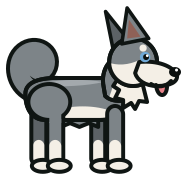
Siberian Husky
A friendly, enduring and independent sled dog, developed to pull over long distances. It needs substantial exercise, secure management and a home that understands both its urge to run and its prey drive.
Energy level
5/5 Needs a job every day
Size
- Weight
- 16–27 kg
- Height
- 51–60 cm
Facts
- Origin
- Siberia (Russia)
- FCI group
- 5
- Life expectancy
- 11–14 years
Exercise needs
The Siberian Husky has very high activity needs and requires physical work and mental stimulation every day. Pulling activities, running and long hikes may suit healthy adult dogs when workload and temperature are appropriate. The breed has a strong urge to run and often a marked prey drive, so use a lead, harness or securely fenced area.
Suitable activities
- Sled work and other pulling activities
- Running and long hikes
- Adapted backpacking
- Reward-based cooperation training
Traits
A good fit for
- Very active owners
- Sled sports and outdoor life
- Homes able to provide company, structure and secure fencing
Worth considering
- A strong urge to run and prey drive make off-lead freedom risky
- Needs substantial activity and does poorly with long days alone
- Sheds very heavily during seasonal coat blows
- Can be highly vocal and may howl from excitement, anticipation or loneliness
Coat and grooming
The dense double coat is relatively self-cleaning and generally needs weekly brushing. The undercoat sheds heavily once or twice a year, when loose coat needs to be brushed out more often. Check nails, paws, skin and teeth regularly as well.
Known health issues
- Inherited eye conditions, including cataracts, PRA and glaucoma, may occur
- Epilepsy and hypothyroidism have been reported in the breed
- Skin conditions, including zinc-responsive dermatosis, may occur
- Hip dysplasia occurs, although the breed is generally described as robust
- Contact a veterinarian for vision changes, seizures, persistent skin problems, lameness, or a clear change in energy or weight
Not every dog of the breed gets these issues. Buy from breeders who health-test, and ask your vet if in doubt.
Sources
Last updated: