Flat-Coated Retriever
A cheerful, sociable and hard-working retriever with strong retrieving drive and a great willingness to cooperate. The Flat-Coated Retriever thrives in an active home providing physical activity, mental engagement and abundant family contact.
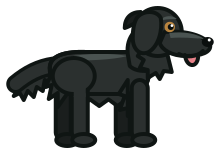
Energy level
5/5 Needs a job every day
Size
- Weight
- 27–32 kg
- Height
- 56.5–61.5 cm
Facts
- Origin
- Great Britain
- FCI group
- 8
- Life expectancy
- 8–10 years
Exercise needs
The Flat-Coat needs substantial daily activity and tasks that use its nose, cooperation and natural retrieving drive. Retrieving, swimming, gundog work and long walks can be combined with short reward-based training sessions. Exercise for young dogs should increase gradually while bones and joints develop.
Suitable activities
- Retrieving on land and in water
- Retriever field work and trials
- Scent work and tracking
- Swimming
- Reward-based obedience and dog sports
Traits
A good fit for
- Active families wanting a sociable dog
- Hunters and others wanting to train retrieving
- Owners who enjoy walking, water work and varied dog training
Worth considering
- Exercise and companionship needs are high
- The breed often matures slowly and can be very lively when young
- Retrieving drive and carrying behaviour need positive, appropriate outlets
- Cancer incidence and the relatively short life expectancy should be discussed openly with the breeder
- Choose a breeder who documents hips, patellas, eyes and health history in the family line
Coat and grooming
The medium-length, flat coat should be brushed and combed weekly to remove loose hair and prevent mats in the feathering. Check paws and coat after walks and field work, and keep the drop ears clean and dry after swimming. Nails and teeth need regular care.
Known health issues
- The breed has a higher than normal incidence of some cancers, including soft-tissue sarcomas, haemangiosarcoma, lymphoma and histiocytic sarcoma
- Hip dysplasia and patellar luxation may occur, and breeding dogs should have documented screening
- Inherited eye conditions are monitored through regular eye examinations of breeding dogs
- Regular health checks and knowledge of cancer and longevity in the family line are important when choosing a breeder
- Contact a veterinarian for a new or growing lump, unexplained weight loss, pale gums, lethargy, collapse, persistent lameness or eye problems
Not every dog of the breed gets these issues. Buy from breeders who health-test, and ask your vet if in doubt.
Sources
- Norsk Kennel Klub: Flat coated retriever
- American Kennel Club: Flat-Coated Retriever
- Flat-Coated Retriever Society of America: Health statement
Last updated: