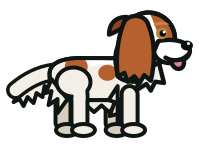
Cavalier King Charles Spaniel
A small, gentle and sociable companion that enjoys staying close to its family while also appreciating walks and accessible dog sports. The breed has important inherited health concerns, making regular veterinary checks and documented health screening particularly relevant.
Energy level
3/5 Active every day
Size
- Weight
- 5.4–8.2 kg
- Height
- 30–33 cm
Facts
- Origin
- United Kingdom
- FCI group
- 9
- Life expectancy
- 12–15 years
Exercise needs
The Cavalier has moderate activity needs and enjoys daily walks, play and short training sessions. It may enjoy obedience, tracking and agility adapted to the individual dog's fitness and health. Use a lead or a securely fenced area where hunting and scenting interests might otherwise draw the dog away.
Suitable activities
- Gentle walks and sniffing walks
- Basic obedience and rally
- Tracking and nose work
- Adapted agility
- Companionship and play
Traits
A good fit for
- Families wanting a sociable companion
- Owners seeking a small walking companion
- People able to provide plenty of company and closeness
Worth considering
- Does poorly with long periods alone
- Health history and documented screening should be examined carefully
- The coat tangles without regular brushing
- Purebred breeding is prohibited in Norway; the NKK is running a crossbreeding project
Coat and grooming
The silky coat should be brushed regularly, with particular attention behind the ears where tangles form easily. Check the ears, teeth, skin and nails as part of routine care. The breed sheds and may need more frequent brushing during seasonal shedding.
Known health issues
- Mitral valve disease is an important health concern in the breed
- Chiari-like malformation and syringomyelia may cause pain and neurological signs
- Inherited eye conditions and luxating patellas may occur
- DNA tests are available for episodic falling and curly coat/dry eye
- Contact a veterinarian for coughing, breathing difficulty, reduced stamina, fainting, pain, or unusual scratching around the head and neck
Not every dog of the breed gets these issues. Buy from breeders who health-test, and ask your vet if in doubt.
Sources
- Norsk Kennel Klub: Cavalier king charles spaniel
- American Kennel Club: Cavalier King Charles Spaniel
- VCA Animal Hospitals: Cavalier King Charles Spaniel
- PDSA: Cavalier King Charles Spaniel
Last updated: