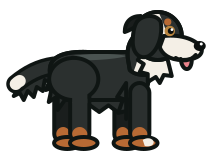
Bernese Mountain Dog
A large, good-natured and devoted farm and family dog that enjoys working closely with its people. The Bernese Mountain Dog thrives on daily activity, tasks and companionship, and this sensitive breed should always be trained with patience and rewards.
Energy level
3/5 Active every day
Size
- Weight
- 32–52 kg
- Height
- 58–70 cm
Facts
- Origin
- Switzerland
- FCI group
- 2
- Life expectancy
- 7–10 years
Exercise needs
An adult Bernese Mountain Dog needs daily walks and may enjoy tracking, rally, adapted carting and steady countryside outings. Large puppies and adolescents should have exercise load built gradually while their bodies develop. Adapt activity to age, health, temperature and individual fitness, with good opportunities to rest.
Suitable activities
- Steady walks over varied terrain
- Tracking and nose work
- Reward-based rally
- Adapted carting
- Simple cooperative tasks
Traits
A good fit for
- Families wanting a large and sociable dog
- Owners who enjoy moderate-paced outdoor life
- Homes able to provide companionship and reward-based tasks
Worth considering
- The large body requires space and responsible handling
- The breed sheds heavily and needs regular grooming
- The thick coat makes hot days more demanding
- The breed does poorly with long periods alone
- Life expectancy is shorter than in many smaller breeds
Coat and grooming
The long double coat should be brushed at least weekly and daily during heavy seasonal shedding. Check carefully where mats form easily, and inspect the skin, ears, teeth, paws and nails regularly. The thick coat suits cool weather but requires extra care in heat.
Known health issues
- Hip and elbow dysplasia may occur, making documented screening of breeding dogs important
- Some cancers occur in the breed and may contribute to its relatively short life expectancy
- Degenerative myelopathy, heart conditions and inherited eye conditions are included in available health screening
- Large dogs can develop acute bloat; a swollen abdomen, unproductive retching, restlessness, or collapse requires immediate veterinary care
- Contact a veterinarian for new lumps, persistent lameness, weakness, breathing difficulty, vision changes, or other marked changes
Not every dog of the breed gets these issues. Buy from breeders who health-test, and ask your vet if in doubt.
Sources
- Norsk Kennel Klub: Berner sennenhund
- American Kennel Club: Bernese Mountain Dog
- Norsk Kennel Klub: Raser med krav til kjent HD/AD-status
Last updated: